
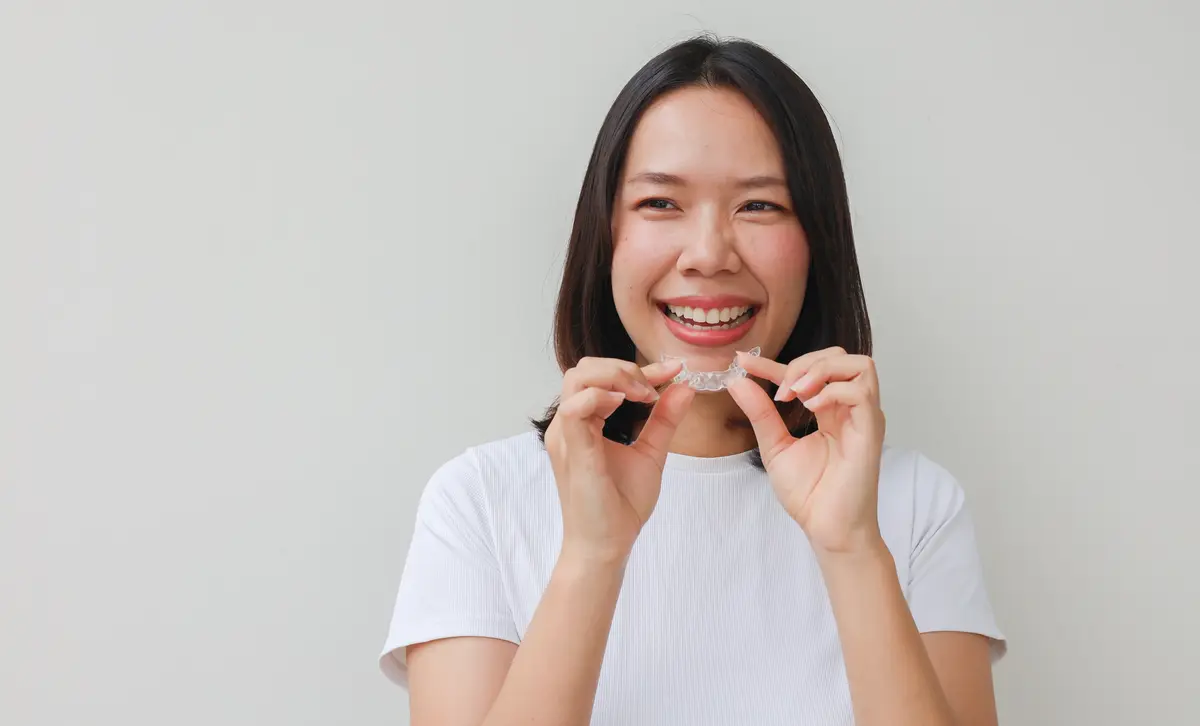
Many patients ask, how do I survive the first week of Invisalign? The answer is to focus on routine. Wear your aligners as instructed, manage discomfort safely, clean your teeth before putting your trays back in, and know when something needs your dentist’s attention.
Invisalign clear aligners are designed to gradually move your teeth using a series of removable, custom-made trays.
Clear aligners are commonly used to help address concerns such as crowded teeth, gaps, overbite, underbite, open bite, crooked teeth, and crossbite, depending on your dental condition and treatment plan.
Medical note: This article is for general patient education only and does not replace a dental consultation. If your aligners feel unusually painful, damaged, loose, or do not fit properly, contact your dentist for personalised advice.
What to Expect During Your First 7 Days with Invisalign
Your first week is mainly an adjustment period. The aligners should feel snug because they are applying controlled pressure to move your teeth, but they should not cause sharp, severe, or worsening pain.
Here is a simple guide to what many patients may experience during the first seven days:
| Day | What You May Experience | What To Do | What To Avoid |
| Day 1 | Tightness, pressure, and awkward tray removal | Practise removing and reinserting your aligners slowly | Do not keep removing them just to check the fit |
| Days 2 to 3 | Teeth may feel more tender when chewing | Choose softer foods and maintain your wear time | Do not leave trays out for long breaks |
| Days 4 to 5 | Speech and saliva changes may start improving | Practise speaking aloud and keep your cleaning routine consistent | Do not remove trays whenever speech feels awkward |
| Days 6 to 7 | Aligners may feel more familiar | Check that the trays fit well and review your daily wear time | Do not switch trays early unless your dentist has instructed you to |
The first few days can feel the most noticeable because your mouth is getting used to the aligners. As your routine becomes more natural, wearing, removing, cleaning, and storing your trays should become easier.
It is also worth remembering that visible tooth movement may not be obvious in the first week. The first seven days are more about adjustment, fit, comfort, and building habits that support the rest of your treatment.
Tip #1: Wear Your Aligners for the Recommended Hours
Invisalign works through consistent wear. Your aligners need enough time on your teeth each day to guide movement according to your treatment plan.
The American Association of Orthodontists notes that clear aligners are removable for eating and hygiene, but should be worn for 20 to 22 hours per day or as prescribed by your orthodontist.
This means you should usually remove your aligners only when eating, drinking anything other than water, brushing, and flossing.
Why does this matter in the first week
The first week sets the tone for the rest of your treatment. If you get used to leaving your aligners out during long meals, coffee breaks, office lunches, or social events, it becomes harder to meet your daily wear time later.
Repeatedly missing wear time may also make your trays feel tighter when you put them back in. More importantly, it may affect how well your teeth track according to the planned movement.
A simple daily wear-time routine
| Situation | What To Do |
| Breakfast | Remove aligners, eat, brush, then reinsert them |
| Office coffee or kopi break | Remove trays before drinking, rinse after, and clean when possible |
| Lunch outside | Bring your aligner case and travel toothbrush |
| Dinner | Avoid leaving trays out while chatting after meals |
| Bedtime | Check that your aligners are seated properly before sleeping |
A useful first-week habit is to set a reminder on your phone after meals. You can also follow a simple sequence: eat, brush, rinse your trays, then reinsert them immediately.
If you are still deciding whether Invisalign aligners for teeth are suitable for you, your dentist can assess your bite, spacing, crowding, and overall oral health before recommending the next step.
Tip # 2: Manage Pressure and Tenderness Safely
Mild pressure is common in the first week. This pressure usually means the aligners are fitting closely and starting to guide your teeth into new positions.
You may feel:
| Normal First Week Sensations | What It May Feel Like |
| Dull pressure | A tight feeling around the teeth |
| Mild soreness | Tenderness when chewing |
| Snug aligner fit | Slight resistance when seating the trays |
| Tenderness during removal | Sensitivity when taking the aligners out |
| Slight lisp | Your tongue is adjusting to the trays |
| Extra saliva | Your mouth is adapting to something new |
This discomfort should be manageable. It should not feel sharp, and it should not keep getting worse.
First-week Invisalign discomfort timeline
| Period | What It May Feel Like | What You Can Do |
| First few hours | Tightness or pressure | Keep aligners in and avoid repeatedly removing them |
| Day 1 to 3 | Teeth may feel tender when chewing | Choose soft foods and ask your dentist about suitable pain relief if needed |
| Day 4 to 5 | Pressure may start to feel more manageable | Maintain wear time and cleaning habits |
| Day 6 to 7 | Aligners may feel more natural | Check that trays are still fitting well |
Ways to make Invisalign more comfortable in the first week
| Tool or Habit | When It Helps | Safety Note |
| Softer foods | When teeth feel tender during chewing | Choose options that require less biting pressure |
| Dentist-approved pain relief | When soreness affects your daily routine | Ask your dentist first, especially if you have allergies, medical conditions, or take other medications |
| Cold compress | If your jaw or cheeks feel sore | Use externally and avoid extreme cold directly on the skin |
| Orthodontic wax | If an aligner edge rubs your cheek or tongue | Contact your dentist if irritation continues |
| Aligner chewies | If your dentist has advised you to use them to help seat trays | Do not bite aggressively or use them without guidance |
| Tray change at night | If recommended by your dentist | Follow your prescribed aligner schedule |
Do not stop wearing your aligners for long periods without asking your dentist. If discomfort feels unusual or difficult to manage, arrange a review instead of trying to adjust the trays yourself.
Is this normal during the first week?
| What You Notice | Usually Normal? | What To Do |
| Mild pressure | Yes | Continue wearing your aligners as instructed |
| Tenderness when chewing | Yes | Eat softer foods for a few days |
| Slight lisp | Yes | Practise speaking with aligners in |
| Extra saliva | Yes | Give your mouth time to adjust |
| Sharp pain | No | Contact your dentist |
| Aligner does not fit | No | Ask your dentist before changing trays |
| Bleeding or persistent ulcers | No | Arrange a dental review |
| Cracked, warped, or lost aligners | No | Contact your dentist for instructions |
Tip # 3: Eat Softer Foods and Plan Your Meals Better
One benefit of clear aligners is that they are removable. Unlike fixed braces, clear aligners can be taken out for eating, brushing, and flossing, which helps patients maintain their usual diet and hygiene routine.
However, during the first few days, your teeth may feel tender. Softer foods can make meals more comfortable while your mouth adjusts.
Good first week food options include:
| Food Option | Why It Helps |
| Porridge | Soft and easy to chew |
| Scrambled eggs | Gentle on tender teeth |
| Soup | Easy to eat during sore days |
| Pasta | Softer texture when cooked well |
| Steamed fish | Soft protein option |
| Soft rice dishes | Familiar and easy to manage |
| Yoghurt | No chewing required |
| Soft fruits | Easier than crunchy snacks |
You do not need to avoid all hard foods forever, but it helps to be practical during the first week. If chewing feels uncomfortable, choose meals that require less biting pressure.
Invisalign tips for eating out in Singapore
| Situation | First Week Tip |
| Hawker lunch | Choose softer meals and bring your aligner case |
| Kopi break | Remove aligners before coffee and rinse after |
| Long office day | Carry a travel toothbrush, toothpaste, and floss |
| School schedule | Pack water and a case for recess or lunch |
| Dinner out | Do not wrap aligners in tissue because they may be thrown away |
| Long commute | Keep your case in your daily bag so trays are not left loose |
Drinks to be careful with
Water is the safest drink while your aligners are in.
Coffee, tea, soft drinks, juices, and coloured drinks can stain your aligners or leave sugar and acid trapped against your teeth. Hot drinks may also affect the aligner material, so it is better to remove your trays before drinking them.
For patients in Singapore, this often means planning around kopi breaks, office lunches, school meals, and long days outside the home. Keep your aligner case and travel brushing kit with you so your routine does not fall apart when you are out.
Tip # 4: Build a Cleaning Routine from Day One
Your aligners sit closely over your teeth for many hours each day. If food particles, plaque, or sugary residue are trapped under the trays, this can affect your oral hygiene.
The simplest rule is this: clean your teeth before putting your aligners back in whenever possible.
Clean your teeth before reinserting aligners
During your first week, try to build these habits:
| Habit | Why It Matters |
| Brush after meals | Removes food and plaque before trays go back in |
| Floss daily | Clears food from between teeth |
| Rinse if brushing is not possible | Helps reduce residue until you can brush properly |
| Brush properly later | Rinsing is not a full replacement for brushing |
| Avoid reinserting after sweet drinks | Reduces the risk of trapping sugar against teeth |
A dental examination before starting treatment also helps your dentist check for oral health issues that may need to be managed before or during Invisalign treatment.
Clean your aligners properly
Your aligners also need care. Rinse them whenever you remove them, and avoid leaving saliva or plaque to dry on the trays.
Use cool or lukewarm water rather than hot water. Healthline notes that very hot water can warp the plastic in aligners, potentially affecting fit and treatment progress.
Avoid these cleaning mistakes:
| Cleaning Mistake | Why To Avoid It |
| Using hot water | May distort clear aligner plastic |
| Using coloured mouthwash | May stain trays |
| Reinserting after sweet drinks | Traps sugar against teeth |
| Leaving trays to dry without rinsing | Makes residue harder to remove |
| Brushing trays aggressively | May scratch the plastic |
| Leaving trays exposed | Increases the risk of loss or contamination |
A clean aligner is not only better for hygiene. It also looks clearer and feels more comfortable to wear.
Tip #5: Practise Removing, Reinserting, and Storing Your Aligners
The first few days can feel awkward as you learn to handle the trays. This is especially true if your treatment includes attachments, which are small tooth-coloured shapes placed on the teeth to help the aligners grip and move the teeth more effectively.
How to remove aligners more comfortably
Start slowly. Do not yank the aligners from the front teeth.
Try this approach:
- Wash your hands first.
- Start from the back molars.
- Gently loosen one side.
- Loosen the other side.
- Work the aligner forward carefully.
- Place the tray straight into its case.
It may take a few tries before this feels natural. Be patient with yourself during the first week.
How to know if your aligners are seated properly
Your aligners should fit closely over your teeth. There should not be large gaps between the tray and the tooth surface.
If your aligners do not sit properly:
| What You Notice | What To Do |
| Small tight feeling | Continue wearing as instructed if the tray seats fully |
| Large visible gap | Contact your dentist for advice |
| Tray keeps lifting | Do not force it aggressively |
| Sharp pain when sitting | Stop and contact your dentist |
| Chewies were provided | Use them only as instructed by your dentist |
| Tray feels warped | Do not continue without checking with your dentist |
Do not bite aggressively to force your aligners into place. If the tray does not seat properly, it may need to be reviewed.
How to avoid losing or damaging aligners
One of the most common first-week mistakes is removing aligners during a meal and wrapping them in tissue. They can easily be thrown away by accident.
Keep a small Invisalign kit with you:
| Keep This With You | Why It Helps |
| Aligner case | Prevents loss or accidental disposal |
| Travel toothbrush | Makes brushing after meals easier |
| Toothpaste | Helps maintain your routine outside the home |
| Floss | Removes food before reinserting trays |
| Water bottle | Helps rinse your mouth and trays |
| Lip balm | Helps if your lips feel dry during adjustment |
Your aligner case should become part of your daily essentials, just like your phone, wallet, or keys.
Tip #6: Avoid These Common First Week Invisalign Mistakes
The first week is easier when you know what not to do. Small habits can make a big difference to comfort, hygiene, and treatment consistency.
| Mistake | Why It Matters | Better Habit |
| Leaving aligners out too long | May affect wear time and progress | Put them back in after brushing |
| Drinking coffee with aligners in | Can stain trays | Remove trays before coffee |
| Cleaning trays with hot water | May warp the plastic | Use cool or lukewarm water |
| Wrapping trays in tissue | Easy to throw away by mistake | Use the aligner case |
| Skipping brushing before reinserting | Can trap food and plaque | Brush or rinse first |
| Removing aligners whenever speech feels awkward | Slows adaptation | Practise speaking with them in |
| Switching trays early | May affect planned movement | Follow your dentist’s schedule |
| Ignoring fit problems | Poor fit can affect tracking | Contact your dentist early |
You may also notice a slight lisp or extra saliva at the beginning. This is usually part of the adjustment process. Try reading aloud for a few minutes each day and speaking slowly instead of removing your aligners whenever speech feels different.
The more consistently you wear them, the faster your mouth can adapt to the new feeling.
Tip #7: Give Your Speech and Daily Routine Time to Adjust
A slight lisp, excess saliva, or an awkward feeling when speaking can occur during the first week of Invisalign treatment. This is usually because your tongue and mouth are adjusting to the shape of the aligners.
Instead of removing your aligners whenever speaking feels uncomfortable, give yourself time to practise. Try reading aloud for a few minutes each day, speaking slowly during conversations, and keeping your aligners in as instructed.
| What You May Notice | Why It Happens | What To Do |
| Slight lisp | Your tongue is adjusting to the trays | Practise reading aloud daily |
| Extra saliva | Your mouth senses something new | Keep wearing the aligners consistently |
| Dry lips | Your mouth may feel different at first | Keep lip balm with you |
| Awkward speech during meetings or school | You are still adapting | Speak slowly and avoid removing trays unnecessarily |
The more consistently you wear your aligners, the faster your mouth can adapt. Most patients find that speaking and daily routines become easier after the first week.
Your First Week with Invisalign Gets Easier with Routine
Your first week with Invisalign may feel strange, but it becomes easier once you build the right habits. Mild pressure, careful cleaning, consistent wear, softer foods, and proper aligner storage can make the first seven days much smoother.
The most important thing is not to aim for a perfect first week. Aim for a consistent one. Keep your aligners in as instructed, clean your teeth before reinserting them, use your case every time, and speak to your dentist if something feels painful, damaged, or unusual.
If you are considering Invisalign clear aligners or have concerns about your first tray, Oxley Dental can assess your teeth, explain your options, and guide you through each stage of treatment.
You can also speak with a trusted dental clinic in Singapore if you are unsure whether your aligners are fitting as expected. Reach out to us today!
Frequently Asked Questions
Can I use whitening toothpaste with Invisalign?
Some whitening toothpastes can be abrasive, and whitening results may also be uneven if attachments are placed on your teeth.
What happens if my Invisalign attachments fall off in the first week?
If an attachment falls off, contact your dentist to see whether it needs to be replaced. Attachments help the aligners grip and guide certain tooth movements, so you should not ignore them even if the tray still fits.
Can I chew gum with Invisalign?
You should not chew gum while wearing Invisalign because it can stick to or damage the aligners. If you want to chew gum, remove your aligners first, but remember that leaving them out too long can affect your daily wear time.
Why do my teeth feel loose during Invisalign?
A slight feeling of looseness can occur during orthodontic treatment as the teeth move gradually. However, if a tooth feels very loose, painful, or unstable, contact your dentist for an assessment.
Can I smoke or vape with Invisalign?
It is best to remove your aligners before smoking or vaping, as this can stain the trays and may affect oral health. Speak to your dentist if you smoke regularly, as they can advise you on managing your aligner routine and hygiene.
What should I do if I lose my Invisalign tray during the first week?
Contact your dentist as soon as possible. Do not automatically move to the next tray or go back to the previous one unless your dentist advises you to do so, as the right step depends on your treatment stage.
Can I travel during my first week with Invisalign?
Yes, but you should bring your aligner case, travel toothbrush, floss, and your next or previous tray if your dentist advises it. If you are travelling soon after starting treatment, ask your dentist what to do if a tray is lost or damaged while overseas.
Can Invisalign affect my bite in the first week?
Your bite may feel slightly different as your teeth begin adjusting to the aligners. If your bite feels very uneven, painful, or if your aligners are not seating properly, contact your dentist for advice.
Can I use mouthwash while wearing Invisalign?
You should not use coloured mouthwash while wearing your aligners, as it may stain them. If you use mouthwash, remove your aligners first, rinse your mouth, then put them back in.
Can Invisalign cause headaches in the first week?
Some patients may experience mild headaches when they first start Invisalign because the teeth and jaw are adjusting to new pressure. If the headache is severe, persistent, or comes with jaw pain, contact your dentist for advice.
Can Invisalign make my jaw hurt?
Mild jaw discomfort may happen as your bite and mouth adjust to the aligners. However, severe jaw pain, clicking, locking, or worsening pain should be checked by your dentist.
Why do my Invisalign aligners feel sharp?
Aligners may sometimes feel rough at the edges during the first few days. If the edge is cutting your tongue, cheeks, or gums, contact your dentist instead of trimming the aligner yourself.
Can I file my Invisalign aligners if they are cutting my mouth?
Do not file or modify your aligners unless your dentist has advised you to do so. Changing the tray shape may affect the fit and movement plan.
Why do my gums hurt with Invisalign?
Gum tenderness can occur if the aligner edge rubs against the gums or if there is an existing gum issue. If the soreness continues, bleeds, or becomes painful, arrange a dental review.