
Many patients ask, “Are dental implants painful?” In most cases, dental implant placement should not feel sharply painful during the procedure because the area is numbed with local anaesthesia.
You may feel pressure, vibration, tapping, or movement, but not sharp pain. After the anaesthesia wears off, some soreness, swelling, tenderness, or mild bleeding may occur as part of the healing phase.
This article explains the difference between pain during implant placement and soreness after surgery, the anaesthesia and sedation options that may be discussed, what sensations may be expected during healing, and when pain should be checked by a dentist.
If you are considering dental implant services, a proper consultation helps your dentist assess your oral condition, medical history, X-rays or scans, and treatment suitability before recommending the next step.
Medical note: This article is for general educational purposes only and should not be taken as a diagnosis, pain-management prescription, or treatment recommendation. Please consult a dentist for advice based on your oral condition, medical history, X-rays or scans, and treatment plan.
Key Takeaways
- Dental implant placement should not usually feel painful during the procedure because local anaesthesia is used to numb the area. However, patients may still feel pressure, vibration, movement, or mild pulling sensations.
- Pain during the procedure is different from soreness after the procedure. The procedure itself is performed with anaesthesia, while tenderness, swelling, bruising, or mild bleeding may occur after the numbness wears off.
- Sedation may be discussed for anxious patients or more complex implant procedures. The most suitable option depends on your medical history, medications, anxiety level, procedure complexity, and the clinic’s available protocols.
- Discomfort after dental implant placement varies from person to person. Factors such as the number of implants, bone grafting, extraction, gum condition, smoking, and medical history can affect the healing experience.
- Severe, worsening, or persistent pain should be reviewed by your dentist. Symptoms such as increasing swelling, pus, fever, numbness, persistent bleeding, or implant movement should not be ignored.
Are Dental Implants Painful During the Procedure?
Dental implant placement should not usually feel painful during the procedure because local anaesthesia is used to numb the area.
However, you may still feel pressure, vibration, movement, water spray, suction, or mouth-opening fatigue. If you feel sharp pain during the procedure, let your dentist know immediately.
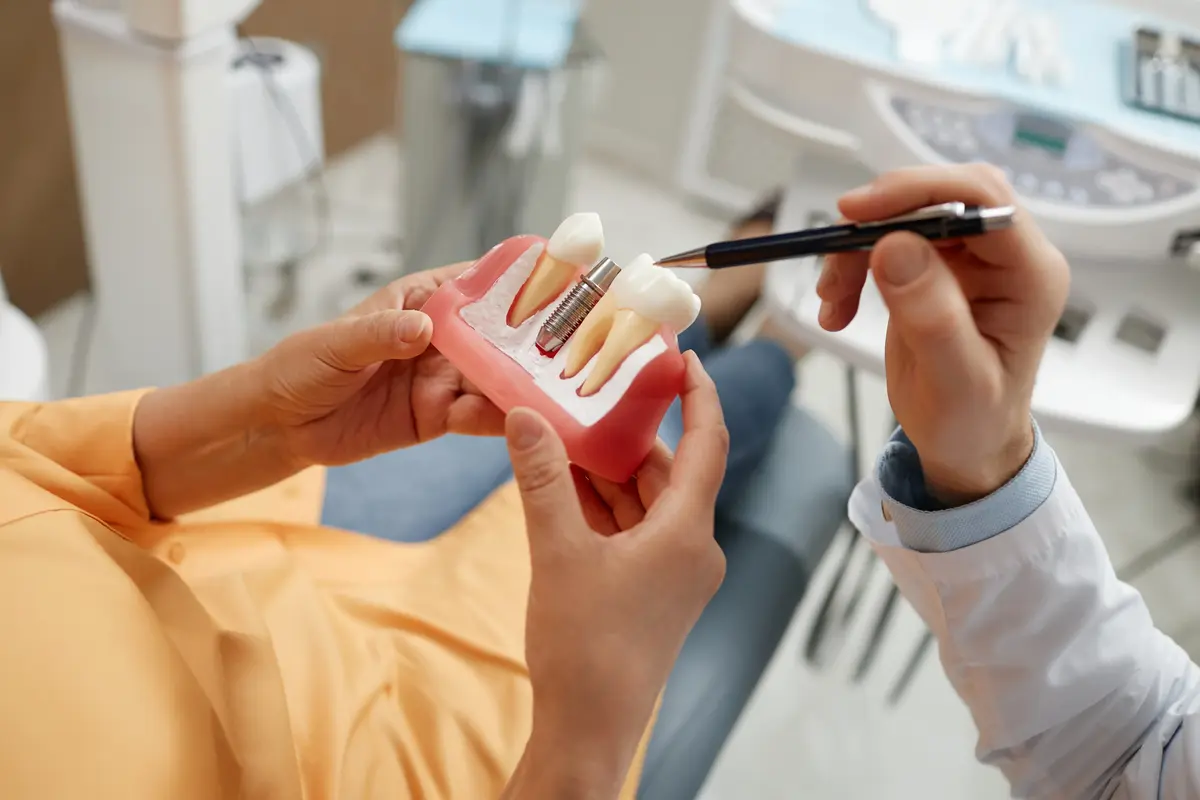
Dental implant surgery involves placing a small implant post into the jawbone to support a future artificial tooth or restoration. It replaces tooth roots with metal, screw-like posts and that pain-control options can include local anaesthesia, sedation, or general anaesthesia depending on the case.
What you may feel during implant placement
During treatment, you may be aware of:
- Pressure
- Vibration
- Tapping
- Pushing or pulling sensation
- Water spray
- Suction
- Mouth-opening fatigue
- Sounds from dental instruments
These sensations can feel unusual, but they are different from sharp pain. If something feels painful rather than just pressured or uncomfortable, you should signal your dentist so they can assess whether more anaesthesia, a pause, or another adjustment is needed.
What you should not ignore during treatment
Let your dentist know if you feel:
- Sharp pain
- Burning pain
- Sudden intense discomfort
- Pain that continues despite anaesthesia
- Difficulty tolerating the procedure
Anaesthesia should help control pain during implant placement, but everyone responds differently. Your dentist can only adjust the procedure if you tell them what you are feeling.
Pain During Surgery vs Soreness After Surgery: What Is the Difference?
Pain during the procedure and soreness after the procedure are not the same.
During implant placement, the treatment area is numbed. After the procedure, the anaesthesia gradually wears off, and the gum and bone begin healing. That is when soreness, tenderness, swelling, or mild bleeding may be noticed.
| Stage | What You May Feel | Why It Happens |
| During implant placement | Pressure, vibration, movement, sound, and mouth-opening fatigue | The area is numbed, but you may still feel non-pain sensations |
| After anaesthesia wears off | Soreness, tenderness, swelling, mild bleeding, bruising | The tissues and bone have been treated during surgery |
| Early healing phase | Gum tenderness, jaw stiffness, and sensitivity in the area | The surgical site is healing |
| Longer healing phase | Less surface discomfort, but ongoing bone integration | The implant gradually integrates with the jawbone |
Soreness after implant placement varies. A single straightforward implant may feel different from a procedure involving extractions, bone grafting, multiple implants, or more complex surgical planning.
What Anaesthesia and Sedation Options May Be Used?
Anaesthesia and sedation help manage comfort during dental implant placement. The right option depends on your health, the complexity of the procedure, your anxiety level, and your dentist’s clinical judgement.
Local anaesthesia
Local anaesthesia numbs the area where the implant will be placed. You remain awake, but the treated area should not usually feel sharp pain.
You may still feel pressure or movement because local anaesthesia blocks pain sensation, not all awareness of touch, pressure, or sound. For many dental implant procedures, local anaesthesia is the main form of pain control.
Sedation for anxious patients or complex cases
Sedation may be discussed if you feel anxious or if the procedure is longer or more complex. Suitability depends on your medical history, medications, anxiety level, the treatment plan, and the clinic’s protocols.
Sedation is not necessary for every patient. Some sedation options may require fasting, an escort home, or extra preparation, so your dentist should explain what applies to your case.
General anaesthesia
General anaesthesia is not required for every implant case. It may be considered in selected settings or more complex cases.
If general anaesthesia is discussed, ask about suitability, preparation, risks, recovery requirements, and whether it is appropriate for your medical history.
Dental implant surgery may involve local anaesthesia, sedation, or general anaesthesia, with specific eating and drinking instructions depending on the type used.
What Does Pain Feel Like After Dental Implant Surgery?
After the anaesthesia wears off, some discomfort may occur. This is part of the body’s response to a surgical procedure, but the intensity and duration vary between patients.
| Sensation | What It May Mean |
| Soreness around the implant site | Common after the gum and bone have been treated |
| Swelling | May occur as part of the body’s healing response |
| Mild bleeding | May occur shortly after surgery |
| Bruising | May happen in some patients |
| Jaw stiffness | Can result from keeping the mouth open during treatment |
| Gum tenderness | May occur around the surgical area |
| Sensitivity when chewing nearby | May happen while the area is healing |
Soreness after surgery should be monitored. It is not helpful to compare your recovery too closely with another person’s because implant procedures can differ significantly.
A single implant placed in a straightforward site may involve less discomfort than a case involving tooth extraction, bone grafting, sinus-related planning, or multiple implants.
Slight bleeding and swelling can be normal after implant placement, while possible complications can include infection, delayed jawbone healing, nerve damage, severe bleeding, or sinus damage.
What Can Affect How Much Discomfort You Feel?
Not every dental implant procedure feels the same afterwards. Several factors can affect how much discomfort you may feel during the healing phase.
| Factor | Why It Matters |
| Number of implants placed | More surgical sites may lead to more soreness |
| Bone grafting | Additional procedures can increase healing demands |
| Tooth extraction on the same day | Extraction sites may add discomfort |
| Implant location | Upper and lower jaw procedures may feel different |
| Gum condition | Inflamed tissues may be more sensitive |
| Medical history | Diabetes, smoking, and healing conditions may affect recovery |
| Personal pain tolerance | Patients experience and describe discomfort differently |
| Aftercare routine | Poor hygiene, smoking, or missed reviews may affect healing |
This is why your dentist’s assessment matters. Your expected recovery depends on your treatment plan, oral condition, and general health.
If bone grafting or extraction is part of the implant plan, ask your dentist how this may affect healing and aftercare. If you smoke, have diabetes, take blood thinners, or have other medical conditions, tell your dentist before treatment so they can advise you appropriately.
A dental examination can help identify oral health factors that may affect your implant planning, such as gum condition, bone support, remaining teeth, and bite concerns.
How Can You Manage Discomfort After Implant Placement?
Aftercare should be based on your dentist’s instructions. The guidance below is general and may not apply to every case.
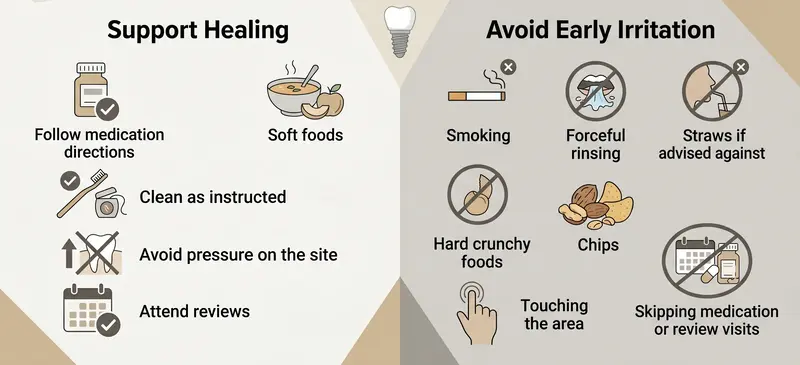
Follow your dentist’s medication instructions
Take prescribed or recommended medication only as directed. Tell your dentist about allergies, medical conditions, blood thinners, supplements, and current medication before the procedure.
Do not self-medicate beyond instructions. If discomfort does not improve as expected or feels unusual, contact your dentist instead of increasing medication on your own.
Support the healing area
Your dentist may advise you to:
- Bite on gauze if instructed
- Apply a cold compress externally only if advised
- Eat softer foods initially
- Avoid chewing directly on the implant site
- Keep the area clean as instructed
- Avoid smoking during healing
- Attend review appointments
These steps are meant to support healing and reduce unnecessary irritation around the surgical site.
What to avoid during early healing
Depending on your case, your dentist may ask you to avoid:
- Smoking
- Forceful rinsing early after surgery
- Drinking through a straw if advised
- Hard or crunchy foods on the surgical site
- Touching the area with fingers or tongue
- Skipping prescribed medication
- Skipping review visits
Follow the aftercare instructions given to you, as these may vary depending on whether your procedure involved extraction, grafting, stitches, or multiple implants.
Normal vs Concerning Symptoms After Dental Implant Surgery
Some sensations may be expected after dental implant placement. Others should be reviewed.
| Symptom | Usually Expected? | What To Do |
| Mild soreness | May be expected | Follow aftercare instructions |
| Swelling | May occur during healing | Monitor and follow your dentist’s advice |
| Mild bleeding shortly after surgery | May occur | Use gauze as instructed |
| Bruising | May happen in some cases | Monitor and mention during review if concerned |
| Jaw stiffness | May occur | Follow recovery advice |
| Pain that worsens instead of improving | Concerning | Contact your dentist |
| Severe pain not relieved by prescribed medication | Concerning | Arrange a review promptly |
| Persistent bleeding | Concerning | Contact your dentist |
| Pus, fever, or bad taste | Concerning | May require clinical assessment |
| Persistent numbness or tingling | Concerning | Contact your dentist promptly |
| The implant feels loose | Concerning | Seek dental review |
It is possible that dental implant surgery risks such as infection at the implant site, injury to nearby structures, nerve damage that may cause pain, numbness or tingling, and sinus problems for upper jaw implants.
This does not mean these complications will happen. It means persistent, worsening, or unusual symptoms should be checked instead of ignored.
How to Prepare If You Are Worried About Dental Implant Pain
Feeling anxious before dental implant placement is common. Preparing your questions before the consultation can help you understand the procedure more clearly.
Questions to ask before treatment
Ask your dentist:
- What anaesthesia will be used?
- Am I suitable for sedation?
- How long will the procedure take?
- Will I need bone grafting or extraction?
- What should I expect after the anaesthesia wears off?
- What medication or aftercare instructions will I receive?
- What symptoms should prompt me to contact the clinic?
- When should I return for review?
These questions help you understand what is specific to your case rather than relying on general assumptions about implant pain.
Share your concerns before the procedure
Tell your dentist if you have dental anxiety or if you have had a difficult experience with dental treatment, anaesthesia, or surgery in the past.
You should also provide details about:
- Medical conditions
- Current medication
- Allergies
- Smoking habits
- Previous implant, extraction, or surgery experiences
- Any history of slow healing or bleeding issues
You can also ask what signal to use during the procedure if you feel discomfort or need a pause. This can help you feel more prepared before treatment begins.
If you are unsure whether implants are suitable for you, a consultation at a dental clinic in Singapore can help you understand your possible treatment options based on your oral condition and clinical assessment.
Dental Implants Should Not Usually Be Painful During Placement
Dental implant placement should not usually feel painful during the procedure because local anaesthesia is used to numb the area. However, you may still feel pressure, vibration, movement, or mouth-opening fatigue while the dentist works.
Soreness after surgery is different from pain during the procedure. Some tenderness, swelling, bruising, mild bleeding, or jaw stiffness may occur after the anaesthesia wears off, and the level of discomfort depends on your treatment complexity, health, and aftercare routine.
If you are concerned about pain, anaesthesia, sedation, or recovery after dental implant placement, arrange a dental assessment so your dentist can review your oral condition, medical history, imaging, and treatment options before giving personalised advice.
You may book an appointment with Oxley Dental for an assessment and personalised guidance based on your dental condition and treatment needs. Contact us for more information!
Frequently Asked Questions
Are dental implants painful during surgery?
Dental implant placement should not usually feel sharply painful because local anaesthesia is used to numb the area. You may still feel pressure, vibration, movement, or sound during the procedure.
If you feel pain during treatment, let your dentist know so they can assess whether more anaesthesia, a pause, or another adjustment is needed.
How long does pain last after dental implant surgery?
Discomfort varies depending on the complexity of the procedure and your healing response. Some soreness may occur during the early healing phase, but worsening or persistent pain should be checked by your dentist.
Your dentist can advise what is expected for your specific treatment plan, especially if extraction, bone grafting, or multiple implants are involved.
Is dental implant pain worse than tooth extraction?
It depends on the case. A straightforward implant may feel different from a complex extraction, and discomfort varies based on surgery type, healing response, and patient factors.
If you have had a difficult extraction before, let your dentist know so they can explain how your implant procedure may compare.
Can I be sedated for dental implants?
Sedation may be discussed for anxious patients or more complex procedures. Suitability depends on your medical history, medications, procedure complexity, and the clinic’s protocols.
Your dentist should explain whether sedation is appropriate for your case and what preparation may be required.
What does dental implant pain feel like after surgery?
Patients may feel soreness, swelling, tenderness, bruising, jaw stiffness, or mild bleeding after the anaesthesia wears off. These sensations should be monitored and managed according to dental instructions.
If discomfort becomes severe, worsens, or comes with concerning symptoms such as fever, pus, persistent bleeding, or numbness, contact your dentist.
What should I do if dental implant pain gets worse?
Contact your dentist if pain worsens, becomes severe, is not relieved by prescribed medication, or is accompanied by fever, swelling, pus, bleeding, numbness, or implant movement.
Worsening symptoms should be assessed because they may indicate that the surgical site needs review.
Can dental implant surgery cause nerve pain?
Nerve-related symptoms are possible but not expected in every case. If you notice persistent numbness, tingling, burning, or altered sensation after surgery, contact your dentist promptly.
This is especially important for implants placed in areas close to nerves.
Does bone grafting make implant surgery more painful?
Bone grafting can make the procedure and healing process more complex, and some patients may experience more post-operative discomfort. The level of discomfort depends on the type of grafting, the implant site, and your healing response.
Your dentist should explain what to expect based on your treatment plan.